Working Life
Mountain-built economy
Engineering, stonework, secure transit, encryption, trauma medicine, prosthetics, forestry, cold-weather agriculture, legal advocacy and species-adaptive manufacturing shape the economy.

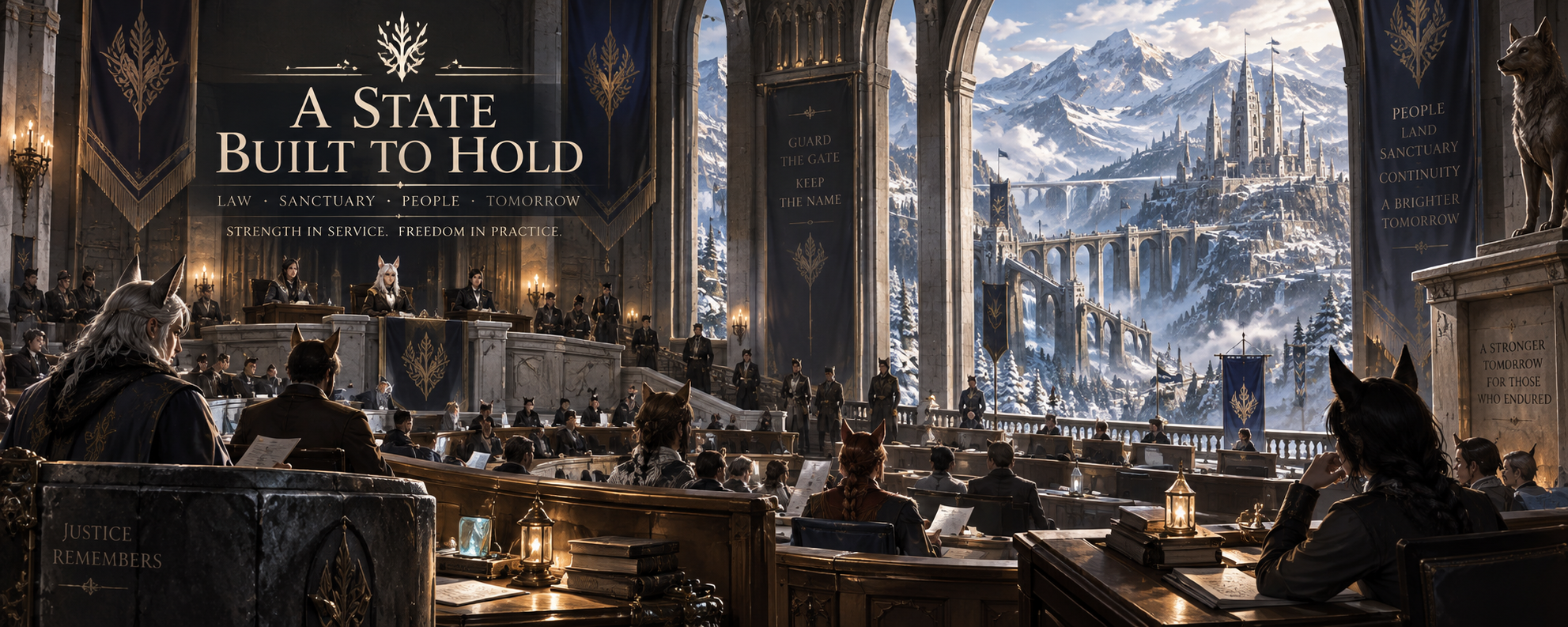
Eastern Realm · Demi-Human Controlled
Thornwyck made sanctuary into a state.
Thornwyck rises through the Thornback Mountains in fortified cities, sanctuary towns, cliff roads, rail passes and old stone watchtowers rebuilt around a modern promise: a person who reaches the gate cannot be reduced to property again.
It is the most formally organized demi-human government in Vistall. Courts reject ownership claims, Borderwatch patrols defend mountain crossings, and entire ministries exist to restore names, citizenship and lives broken by trafficking.
Realm Profile
National Identity
Thornwyck sees itself as the shield of free demi-human civilization. Its people do not separate freedom from responsibility. A refuge that cannot survive attack will eventually cease to be a refuge, and a state that forgets the people it protects has already begun to fail them.
Guard the Gate
Mountain passes are watched, trafficking routes are intercepted, foreign claimants are challenged, and sanctuary remains defended because history taught Thornwyck what happens when safety depends on goodwill alone.
Keep the Name
Human systems rename, classify and erase people. Thornwyck restores chosen names, preserves testimony, records the missing and treats identity as something no owner, laboratory, court or registry has the right to confiscate.
Vigilance · Sanctuary · Witness · Law · Mutual Defense · Body Sovereignty
Culture Preview
Thornwyck is a sanctuary. It is also a country.
Most days are not court hearings or border alarms. People commute through mountain stations, send children to school, open shops, repair transit lines, complain about weather, meet friends for food and build ordinary lives inside a landscape designed for survival.
Working Life
Engineering, stonework, secure transit, encryption, trauma medicine, prosthetics, forestry, cold-weather agriculture, legal advocacy and species-adaptive manufacturing shape the economy.
Built Life
Tail-space seating, horn-safe doors, wing routes, perching balconies, scent-neutral rooms and shift-safe courtyards are ordinary pieces of civic design rather than luxury accommodations.
Public Life
Sanctuary towns contain schools, cafés, clinics, workshops, clothing stores, kitchens and homes. Someone may have arrived as Recovered. Thornwyck expects them to become whatever comes next.
Foreign Position
Thornwyck belongs to Vistall's uneasy demi-human defensive alignment, but it approaches foreign policy the same way it approaches its borders: trust is specific, documented and rarely unconditional.
Thornwyck's most dangerous ideological enemy. Its lawyers challenge Aurelean ownership classifications, ancestry systems and covert transfers wherever evidence can reach a court.
A military rival. Borderwatch and Crown recovery teams collide around mountain passes, rescue corridors and disputed transports.
A legal enemy whose language of care is especially offensive to Thornwyck. Conservatories, custody wards, medical consent and bloodline records remain constant points of conflict.
A necessary and dangerous corridor. Thornwyck uses rescue contacts there while assuming every route can be bought, betrayed or replaced.
Its closest and most difficult ally. Thornwyck trusts law and records. Eirwold trusts secrecy and clan autonomy. When threatened, both still close ranks.
A practical sanctuary partner. Thornwyck provides legal recognition and court power; Veyrhalden provides sea routes, hidden ports and distance from human claims.

Government · Law · Accountability
Thornwyck has the most formal demi-human government in Vistall. Its Assembly, ministries, courts and defense institutions were built around one premise: demi-human personhood is not conditional, and no foreign government can turn a citizen back into an asset by producing the right paperwork.
The Promise
Law, testimony, rescue, military defense and public records reinforce one another. Sanctuary is not left to charity.
The Contradiction
Refugees are registered. Human visitors are monitored. Sanctuary districts are guarded. Thornwyck continually argues over the point where protection begins resembling control.
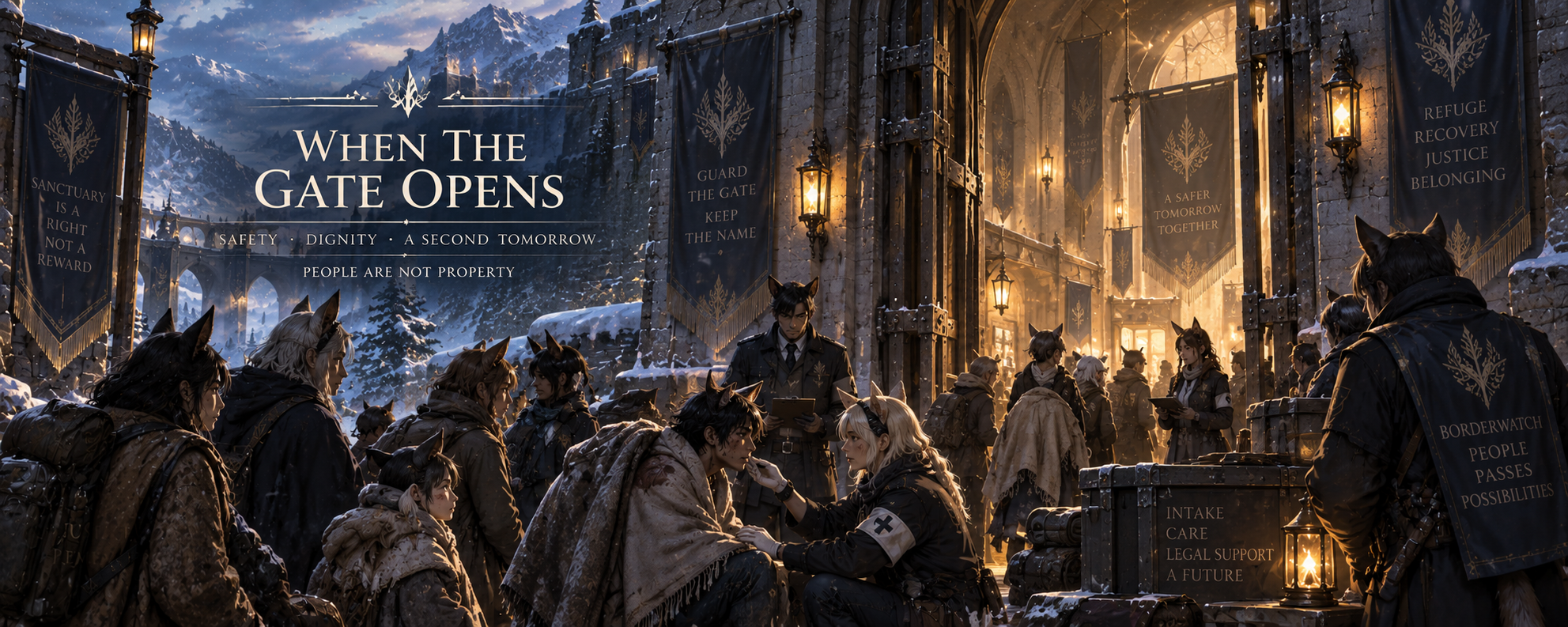
Government Structure
Legislature
Elected representation from mountain cities, sanctuary towns, border districts, species councils, refugee districts, professional guilds and old clan houses. Its structure is designed to prevent any one species or old bloodline from dominating the state.
Executive
Head of state and commander of national defense, elected by the Assembly and confirmed by regional councils. The office oversees border security, diplomacy and emergency authority, and is deliberately term-limited.
Recovery
Manages refugee intake, safehousing, trauma care, family tracing, child protection, translation, medical triage, citizenship restoration and sanctuary placement.
Law
Handles citizenship, body-sovereignty cases, foreign ownership claims, custody disputes, trafficking trials and international legal action.
Courts
Built around survivor testimony, identity restoration, trafficking prosecution and rejection of foreign ownership claims. The starting assumption is that the enslaved person was wronged, not misplaced.
Defense
Part military, part rescue force and part anti-trafficking agency. It guards mountain passes, escorts refugees, intercepts bounty teams and responds when foreign claims become armed incursions.
Sovereign Law
No person's body, blood, shift, ancestry, labor or name may be owned or controlled by another. Thornwyck treats bodily sovereignty as the foundation beneath every other civil right.
No escaped, rescued or sanctuary-claimed demi-human may be returned to an owner, estate, laboratory, zoo, prison or foreign custodial institution.
Ownership documents are evidence of a crime, not evidence of a valid claim. Arriving with a bill of sale does not strengthen a claimant's case.
Medical care, psychological treatment, shifting support and species-specific treatment require consent except during immediate life-threatening emergencies.
People renamed by owners, laboratories, zoos or registries may reclaim an old name, choose a new one, seal an imposed name or challenge its unauthorized use.
Human visitors accept monitored entry, searches and movement restrictions around sensitive areas. Thornwyck recognizes humans as legal persons, but history has not earned them automatic access.

Sanctuary · Recovery · Legal Protection
Sanctuary begins before a person's paperwork is perfect. A demi-human who reaches a Thornwyck sanctuary gate may request protection before their final legal status is settled, placing distance between the hunted person and the government, owner or institution demanding their return.
Recovered Person
People rescued from slavery, trafficking, zoos, laboratories, prisons, lineage estates or ownership households receive legal protection, trauma care, advocacy and immunity from foreign ownership claims.
First Principle
The gate exists so a claimant cannot seize someone while Thornwyck decides which office should handle the file.
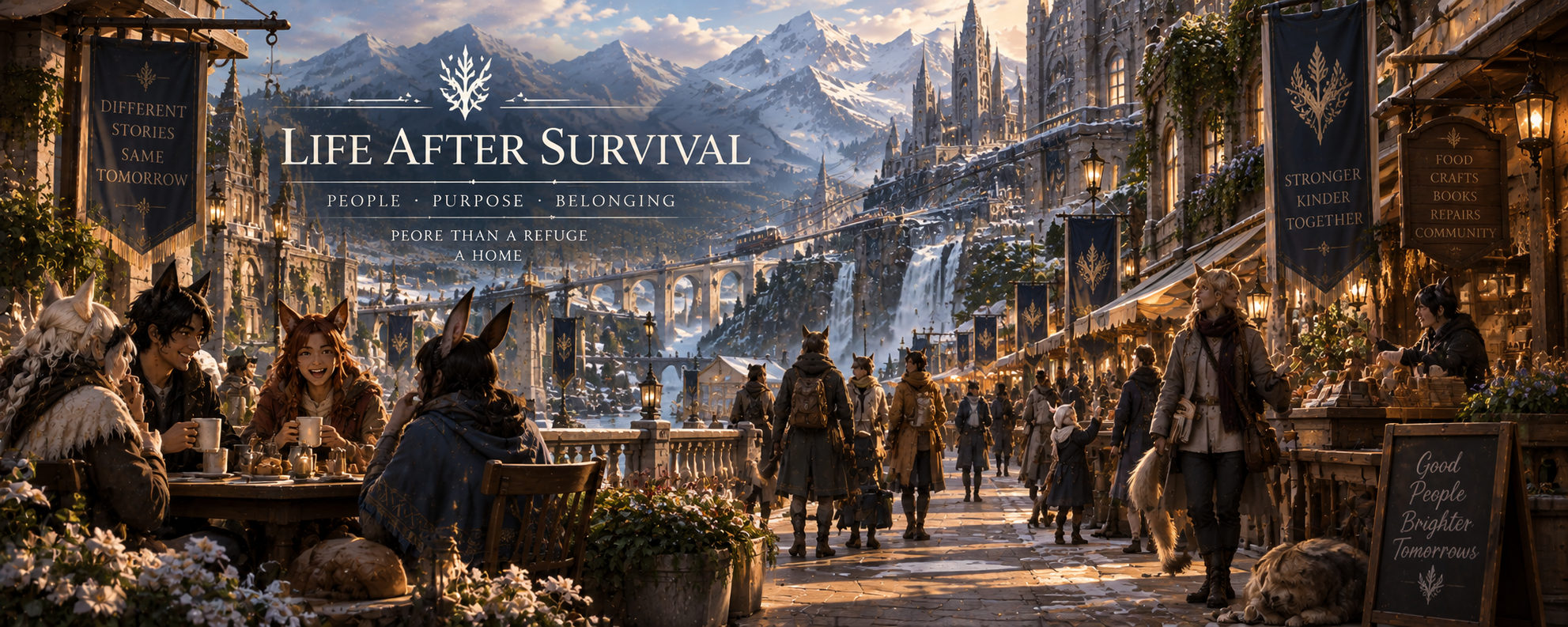
Recovery Process
Thornwyck's formal system can be a shield. Clean records can block bounty claims, prove legal identity and prevent another country from defining a survivor through an ownership file.
It can also be exhausting. Some Recovered people hate forms because forms were once how they were sold. Thornwyck's best advocates understand that protection cannot demand gratitude for paperwork.
Sanctuary Towns
Built for Recovery
Sanctuary communities contain trauma clinics, child-safe houses, collar-removal wards, quiet sleeping halls, schools, kitchens, translation services, clothing stores, legal aid, workshops and guarded transit.
Housing includes tail and wing access, shift-safe courtyards and human-free recovery areas for residents who need distance while they stabilize.
The Necessary Criticism
Some high-risk residents face movement restrictions. Survivors may have to repeat painful histories to several officials. Protective custody can become overbearing when fear outruns consent.
The Grey Antler Office investigates abuses by officials, sanctuary workers, Borderwatch and military personnel because Thornwyck does not consider moral certainty a substitute for oversight.

Culture · Work · Belonging
Thornwyck's culture is shaped by survival, but it is not trapped inside survival. Mountain cities and sanctuary towns are full of old local families, new citizens, workers, students, refugees, artisans and people whose first truly unremarkable afternoon may be one of the most important things the country gives them.
Public Life
A tail does not make a chair unusual. Wings do not make a doorway exceptional. A full legal person using a public street is not a political event.
Belonging
Citizenship, residence, work, friendship, family and community allow people to become something other than the worst thing another country did to them.
Memory · Ritual · Education
The Thornback Mountains are not only defensive terrain. They are national memory. Major passes carry memorials, and the people named there are deliberately kept inside public life rather than buried beneath a government archive.
Every major pass has a memorial.
Every memorial keeps names.
Every name is read aloud on Gatekeeping Day.
Every child learns which passes held, which failed, and why the gates exist.
Daily Life
Built Life
Tail-space seating, horn-safe doors, claw-resistant surfaces, wing routes, perching balconies, scent-neutral rooms, aquatic access and shift-safe public courtyards are designed into civic life.
Working Life
Mountain engineering, secure transit, trauma medicine, prosthetics, encryption, forestry, agriculture, archives and adaptive manufacturing employ demi-humans as paid workers and citizens.
Belonging
Citizens, Sanctuary Residents, Recovered people, stateless residents, Oath-Settled arrivals, Protected Witnesses and vetted human residents all inhabit the realm under different legal paths.

Capital · Sanctuary · Law · Defense
Thornwatch climbs through the Thornback Mountains rather than spreading across them. Streets spiral between elevations, bridges cross impossible drops, rail and cable routes disappear into the stone, and old watchtowers rise beside modern defenses.
It is Thornwyck's political, legal and military center, but refugees have another name for it: The City That Said No. No to ownership claims. No to forced return. No to the idea that another nation's paperwork can make a person property again.
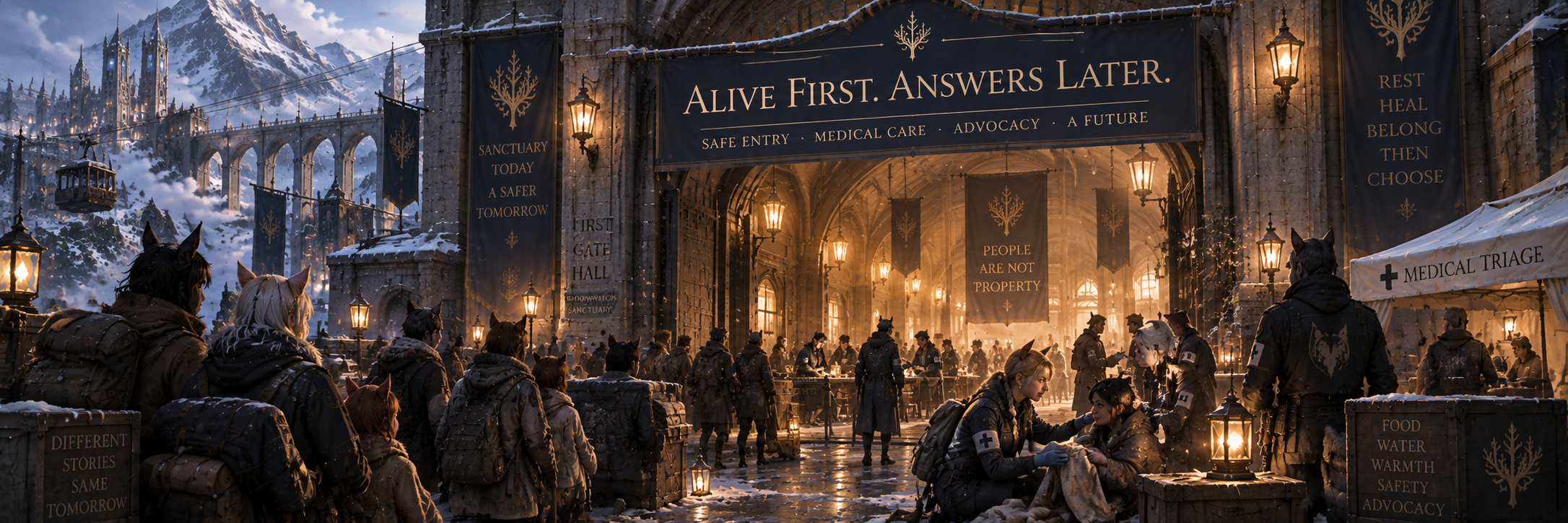
City Districts
Thornwatch is stacked across cliffs, bridges, tunnels and mountain terraces.
The High Gate Assembly, ministries, major courts, diplomatic halls and the ceremonial entrance to the capital occupy its fortified upper terraces.
Witness Courts, protected archives, survivor advocacy offices and memorial halls overlook the city from a quieter civic ridge.
First Gate halls, clinics, Quiet Halls, child-safe houses, advocates, translators and temporary homes make this Thornwatch's principal recovery district.
Military command, Passguards, Storm Rangers, Cliffwatch and anti-trafficking intelligence operate from fortified elevations above the city routes.
Ancient watchtowers, former monasteries, first-generation refugee halls, old tunnels and founding memorials survive beneath newer construction.
Cliff bridges, cable lifts, wing routes, perching terraces, market balconies and mixed-species housing make Bridgeward one of Thornwatch's busiest districts.
Underground roads, reservoirs, secure archives, emergency shelters, protected transit and shift-safe crisis spaces occupy the mountain beneath the city.
Human diplomats, approved traders, scholars and other vetted visitors stay within a monitored district built specifically around Thornwyck's human-entry laws.
Everyday Thornwatch
Public Life
Markets open beneath weather awnings. Children learn wing bridges and tail-safe stairs. Refugees memorize transit routes with advocates. Borderwatch officers drink tea in public squares while old residents argue politics loudly enough for several terraces to hear.
Built for Demi-Humans
Doors account for horns, seats for tails and balconies for wings. Public courtyards allow controlled shifting, while clinics and transit systems are designed around species variation rather than treating it as an exception.
Human Presence
Humans may enter as diplomats, allies, kin, doctors, traders, scholars, defectors or witnesses. Refugee districts remain protected, recording residents is restricted, and foreign custody claims carry no legal standing.

Sanctuary Rise · First Gate
Thornwatch's sanctuary system begins with a deliberately simple rule: a frightened, injured or hunted person does not need to win a legal argument before receiving food, warmth, medical care and protection.
First Gate Hall handles immediate sanctuary claims, medical triage, collar and restraint detection, advocate assignment and the first safety review. The offices can wait. Survival cannot.
First Gate Principle
Foreign warrants and ownership documents do not allow a claimant to remove someone while Thornwyck decides their status.
Carved Above the Hall
Thornwatch considers this less a slogan than a correction to the systems refugees often escaped.
Sanctuary Infrastructure
Quiet Hall Nine is designed so residents can lock doors against outsiders rather than being locked inside. That principle is taken seriously precisely because Thornwyck knows protective systems can fail.
The Antler Line has no public timetable for sanctuary movements. Advocates, protected witnesses and refugee convoys travel under changing schedules intended to make interception difficult.
A sanctuary route should lead toward a life, not deeper into an institution.
Witness Terrace
Witness Courts
Survivor testimony, identity restoration, trafficking prosecution and foreign ownership disputes are heard here. The courtroom architecture physically places foreign claimants below the survivor gallery.
Central Witness Vault
Testimony, trafficking records, custody documents, survivor files, perpetrator names and evidence against foreign institutions are preserved under heavy security.
Broken Chain Rotunda
Destroyed collars, tracking tags, restraint equipment, auction records and custody documents are preserved publicly. A claimant once presented ownership papers there and watched the court enter them as a confession.
Hunter's Evidence Room
Seized bounty equipment, tracking hardware, forged claims and recovery contracts are shown to Borderwatch cadets during training.

Bridgeward · Markets · Transit · Daily Life
Thornwatch's walls and towers dominate its silhouette, but ordinary life fills the spaces between them. Bridgeward carries markets over cliff roads, cafés beneath viaducts, homes along cable routes and public terraces where a person can spend an afternoon without once needing to think about national policy.
Civic Landmarks
National legislative chamber representing cities, sanctuary districts, professional guilds, border regions and species councils.
Executive offices, diplomatic chambers, crisis rooms and the formal residence attached to the Gatewarden's office.
Coordinates protected housing, refugee status, family tracing, child protection, medical care and long-term settlement.
Handles body-sovereignty law, citizenship disputes, trafficking cases and foreign ownership claims.
Where survivor testimony becomes legally recognized evidence and foreign custody claims come to die.
The principal arrival hall for people claiming immediate sanctuary inside Thornwatch.
Public archive and memorial preserving the physical evidence of ownership systems.
One of Thornwyck's most heavily protected collections of trafficking and survivor evidence.
A converted early monastery providing quieter protected housing and longer recovery stays.
A secure rail terminal connecting Thornwatch to sanctuary corridors across the mountain realm.
Shops · Food · Everyday Places
Warm drinks, heavy breakfasts and tall windows overlooking the cable lifts. Students, court clerks and off-duty Borderwatch officers reliably occupy every good table.
A loud neighborhood pub built where three pedestrian spans meet, with seating designed from the start for tails, wings and horns.
Recovered histories, modern fiction, old maps, banned human-state texts and a community notice wall that frequently contains more information than the books.
Affordable groceries and prepared meals. It began as a neighborhood kitchen for newly settled families who had housing but no idea where anything in Thornwatch was sold.
Produce, baked food, adaptive clothing, household goods, winter equipment and craft stalls spread across connected market terraces.
Heavy winter coats, tail openings, wing backs, horn-safe hoods and repairs for travel gear that has lost an argument with mountain weather.
Leisure · Nightlife · Public Space
Thornwatch does eventually clock out.
A broad overlook above the lower city and mountain rail network. Popular near sunset when the first city lights begin appearing across the cliffs.
Cold-hardy plants, heated stone benches, wing perches and sheltered cliff terraces give residents somewhere green even during deep winter.
A restrained tea house with small private booths, no public recording and a loyal population of advocates, writers, clerks and exhausted introverts.
Street food, demonstrations, political speeches, public celebrations and everyday foot traffic fill the square when its emergency bells are silent.
Open at hours invented specifically for engineers, transit crews, emergency staff and Borderwatch shifts with catastrophic sleep schedules.
A former storm shelter converted into a small venue for bands, singers, comedy, community performances and touring artists moving through the capital.

Grey Antler · Accountability · Redress
Grey Antler is smaller than Thornwatch, older in its bones and far less interested in looking impressive. Rain and sleet darken its stone streets, antler banners fade in mountain weather, and some of Thornwyck's most uncomfortable questions are asked inside buildings that look almost ordinary.
This is where complaints against Thornwyck itself come to be heard. Officials, sanctuary workers, Borderwatch personnel and ministries do not become untouchable merely because they serve a demi-human state.
Districts
The Grey Antler Office, misconduct hearings, appeals, protected testimony rooms and complaint halls occupy the town's institutional center.
Memorials preserve the names of people failed not only by human governments, but by Thornwyck itself.
Serves residents harmed after reaching supposed safety through bad placements, unlawful restrictions, institutional neglect or trafficking infiltration.
Mixed-species families, new citizens, human-passing hybrids, Kin-Humans, Oath-Settled residents and human allies make this Grey Antler's most politically complicated neighborhood.
Former religious buildings now hold witness housing, advocacy offices, classrooms and long-term recovery spaces. The resident controls the door.
Tea, food, books, clinics, adaptive clothing, prosthetics, tools, translation and ordinary errands gather around Grey Antler's main commercial streets.
Investigators, Witness Guard, protective escorts and Borderwatch liaisons work here. It is where the watchers report when they are being watched.
People · Complaints · Public Life
Comfort is not the same thing as accountability.
Who Comes Here
Survivors appeal placements. Hybrids challenge invasive scrutiny. Protected residents report restrictions. Officials face misconduct complaints. Sanctuary workers request outside review. Borderwatch personnel may arrive as witnesses, defendants or both.
Humans in Grey Antler
Humans are more visible here than in many Thornwyck settlements because Covenant disputes and ally complaints are heard locally. Historical suspicion does not excuse a Thornwyck official from accountability when a human resident is harmed.
Public Life
Clerks cross wet streets with sealed files, children race through memorial plazas, advocates walk beside survivors, and neighbors debate institutional failures over tea before stopping for groceries on the way home.

Frostmere Lineage House · Closed
Frostmere did not look like a prison. It looked respectable. A private mountain institution with clean stone, warm windows, lineage records, trained staff and the polished language of heritage care.
That appearance protected it. Behind legitimate paperwork, Frostmere selectively bred demi-human children for traits valuable to human buyers, falsified records and moved them through ordinary transport systems toward human-controlled markets.
Frostmere Lineage House · Closed
Frostmere did not look like a prison. It looked respectable. A private mountain institution with clean stone, warm windows, lineage records, trained staff and the polished language of heritage care.
That appearance protected it. Behind legitimate paperwork, Frostmere selectively bred demi-human children for traits valuable to human buyers, falsified records and moved them through ordinary transport systems toward human-controlled markets.
Frostmere Transfer Failure
Apollo
Apollo bit through Calder's glove during the escape. Calder treated resistance as something worth preserving, not correcting.
Landon
When Landon could no longer continue through the mountain cold, Calder carried him. Survival did not become another test he could fail.
After Frostmere
The failed transfer exposed irregular cargo records, falsified rail documentation and connections that led investigators back toward Frostmere. Earlier exports surfaced. Records were seized. Remaining residents were removed. The institution was permanently closed.
But shutting the doors did not answer the question Grey Antler was left with:
The Lesson
Legitimate paperwork can hide illegitimate power. Sanctuary institutions can be fooled, infiltrated, bribed or trusted too easily.
The Failure
Children moved through ordinary records, ordinary transport infrastructure and ordinary professional relationships because each piece looked respectable on its own.
The Risk
A society becomes easier to exploit when it begins believing abuse is something only other countries do.
The Memory
Grey Antler does not need to pretend every modern institution was created because of Frostmere. It only needs to refuse the comforting lie that Frostmere was impossible.
A clean gate must be cleaned from both sides.

Stonebridge · Markets · Community
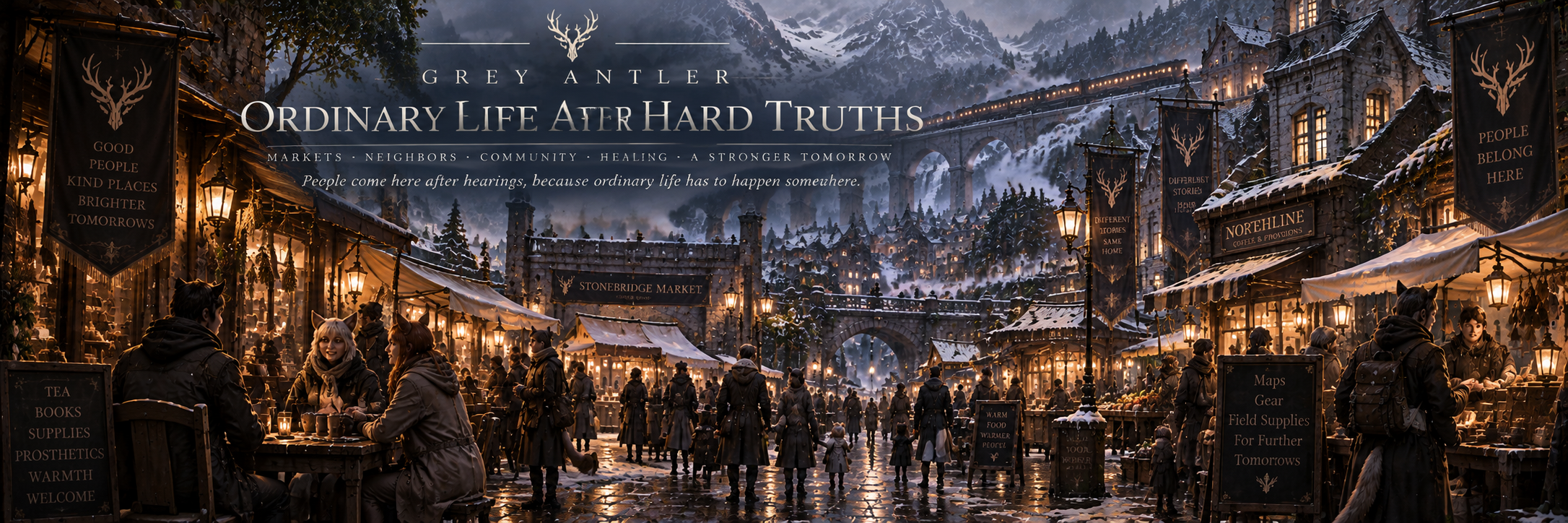
Grey Antler spends a great deal of time confronting painful things. It still has errands on Tuesday.
Stonebridge Market, Mixed Hearth Ward and the neighborhoods around them are full of food stalls, tea houses, booksellers, adaptive clothing shops, prosthetic makers, commuters, children, advocates, investigators and residents whose lives contain considerably more than the cases that once brought them here.
Civic · Legal · Recovery
Independent investigations into misconduct by officials, sanctuary workers, Borderwatch and other Thornwyck institutions.
For people whose first testimony was mishandled, pressured or ignored. A witness may amend it, challenge it, seal it or refuse to repeat it.
Institutional misconduct hearings centered around one question: did safety become control?
Stores complaints, corrected files, misconduct findings, placement failures, reforms and sealed institutional apologies.
Handles legal challenges against Thornwyck decisions. Popular with clients. Significantly less popular with ministries.
A recovery lodge for people harmed by excessive confinement. Interior doors are painted blue to reinforce a simple rule: this door opens for you.
Preserves the names of people Thornwyck failed before rescue, during sanctuary or after settlement.
Consent-centered medical care, trauma support and species-specific treatment with particular attention to institutional medical harm.
Serves mixed-species, human-passing, refugee and mixed-family youth under the principle that no one owes visible proof of belonging.
Reviews sanctuary contracts, emergency spending, medical procurement and public funding because clean intentions still require clean books.
Food · Music · Work · Community
Advocates, investigators, clerks, Borderwatch officers, refugees and human allies exchange gossip over tea with varying levels of pretending it is not gossip.
A warm, inexpensive neighborhood pub full of municipal workers, old locals, new citizens and arguments that migrate between tables without invitation.
A rail-overlook café popular with former railway workers, guides, commuters and anyone who wants to watch trains without admitting that is why they came.
A compact live venue with old stone walls, excellent acoustics and a strong local music scene. Apollo Serpentine is known to perform here.
Maps, climbing gear, mineral cases, weather instruments and field equipment for surveyors, hikers and mountain professionals.
Regional mapping, landslide assessment, rail-bed geology, mineral surveys and mountain-stability work. Landon Serpentine's profession fits naturally into its field operations.
A regional passenger and maintenance station connecting Grey Antler with smaller mountain settlements and Thornwyck's larger rail network.
Pay-what-you-can meals, long communal tables and no expectation that anyone explain why they needed somewhere warm to sit.

Eastern Thornwyck · Border · Refuge · Memory
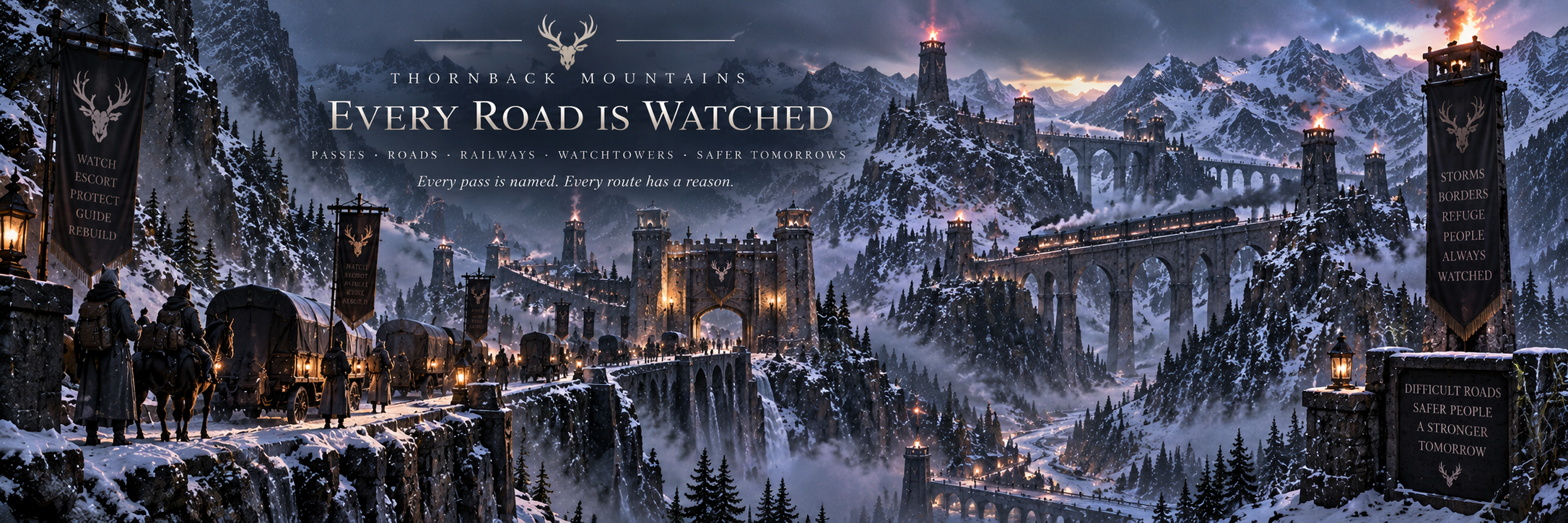
The Thornback Mountains form Thornwyck's eastern spine: storm-cut peaks, deep forests, sanctuary valleys, cliff roads, fortified passes, rail bridges and old watchtowers built across terrain that has shaped nearly every century of the realm's survival.
The mountains did not save Thornwyck because they were impossible to cross. They saved it because every crossing could be watched, defended, remembered and rebuilt.
Regions of the Thornbacks
Fortified approaches equipped with Borderwatch, Storm Towers, scanners, emergency shelters and anti-drone defenses. Reaching one alive can be the difference between pursuit and protection.
Cold forests beneath the high cliffs where poor visibility frustrates drones and pursuit teams. Storm Rangers and sanctuary escorts know how to use the weather rather than fight it.
Narrow roads carved directly into mountain faces. Refugees, witnesses, civilian traffic and Borderwatch convoys share routes designed with multiple alternatives when weather or attack closes the obvious path.
Modern transport corridors intersect ancient passages, archive routes and siege infrastructure deep inside the mountains.
Protected valleys containing clinics, schools, farms, intake towns, recovery lodges and permanent housing beneath watchtowers that remain deliberately visible.
Protected training and recovery grounds where war-form carriers may learn control without surrendering ownership of their strength to the state.
Failed early sanctuary routes and old battle approaches. Some remain sealed, others preserved for memorial walks and Borderwatch training.
The Thornbacks are not gentle. They are shelter with steep edges.
Daily Life · Weather · Refuge
Mountain Life
Road closures, rail delays, snowpack reports, heating systems, water reserves and supply planning shape ordinary routines. Children learn emergency drills because a winter storm can matter as much as any political crisis.
Refuge Life
Mountain settlements know that somebody may arrive injured, exhausted or pursued. Clinics, public halls and transport crews are expected to shift quickly from ordinary civic work into coordinated refuge response.
The Same Road
A former labor prisoner may distrust guarded transport. A San Aurelan escapee may fear scanners. A war-form refugee may feel protected and watched simultaneously. Thornwyck's structures save lives, but survivors bring their histories through the gate with them.

Passes · Roads · Railways · Watchtowers
Movement through the Thornbacks is infrastructure and defense at the same time. Roads carry civilians and rescue convoys. Railways move witnesses and commuters. Watchtowers track storms as readily as hostile drones.
Thornwyck does not try to make every route invisible. It makes routes difficult to seize, easy to reinforce and expensive to attack.
Major Routes
The most famous formal entry into Thornwyck. Refugees, diplomats, convoys and foreign claimants all eventually confront the same fortified gate and the law behind it.
The principal official road connecting Thornwatch, Grey Antler and several sanctuary valleys. Court escorts, Witness Guard, civilian traffic and protected convoys all use it.
A less visible corridor used for survivor transport, sensitive evidence and protected testimony movement between courts and secure residences.
Passenger, sanctuary and legal transport share a rail network carrying ordinary civilians alongside refugees, witnesses, medical transfers and supplies.
A heavily symbolic legal checkpoint where foreign ownership documents cease to function as claims and begin functioning as evidence.
A dangerous pass where bounty and recovery teams have repeatedly been intercepted after entering Thornwyck territory in pursuit of protected people.
Alternate Routes · Infrastructure
Deep Gate Tunnels
Transport corridors, evacuation routes, archive passages and old siege tunnels allow movement when exposed roads become unsafe or impossible.
Deep Gate Reservoirs
Protected reservoirs keep settlements functioning during siege, avalanche isolation and winter road closures.
Emergency Shelters
Mountain shelters provide heat, food, medical equipment and communications for refugees, civilians, guides and Borderwatch personnel caught between safe settlements.
Old Service Routes
Rail engineers, surveyors, guides and long-time mountain workers know maintenance paths, rail cuts, bypass tunnels and service stairs absent from public route maps. People like Calder Wren survived by knowing the mountain beyond its official signs.
Signals · Defense · Warning
Weather warnings, convoy alerts, border threats and anti-trafficking signals move along towers spanning the major passes. When their lights turn red, every settlement pays attention.
An early-warning network that begins quietly through wrist pulses, coded lights and secure signals before public alarms are sounded.
High-elevation observation posts staffed by personnel suited to climbing, flight and difficult terrain. Their job is to see threats before those threats believe they are visible.
Road control, convoy coordination, sanctuary escort and emergency closure points positioned across vulnerable routes.
Electronic counter-surveillance protects critical roads and settlements from human-state reconnaissance systems.
Thornwyck may build for invasion, but the mountain remains perfectly capable of closing a road without consulting geopolitics.

Memory · Witness · Names
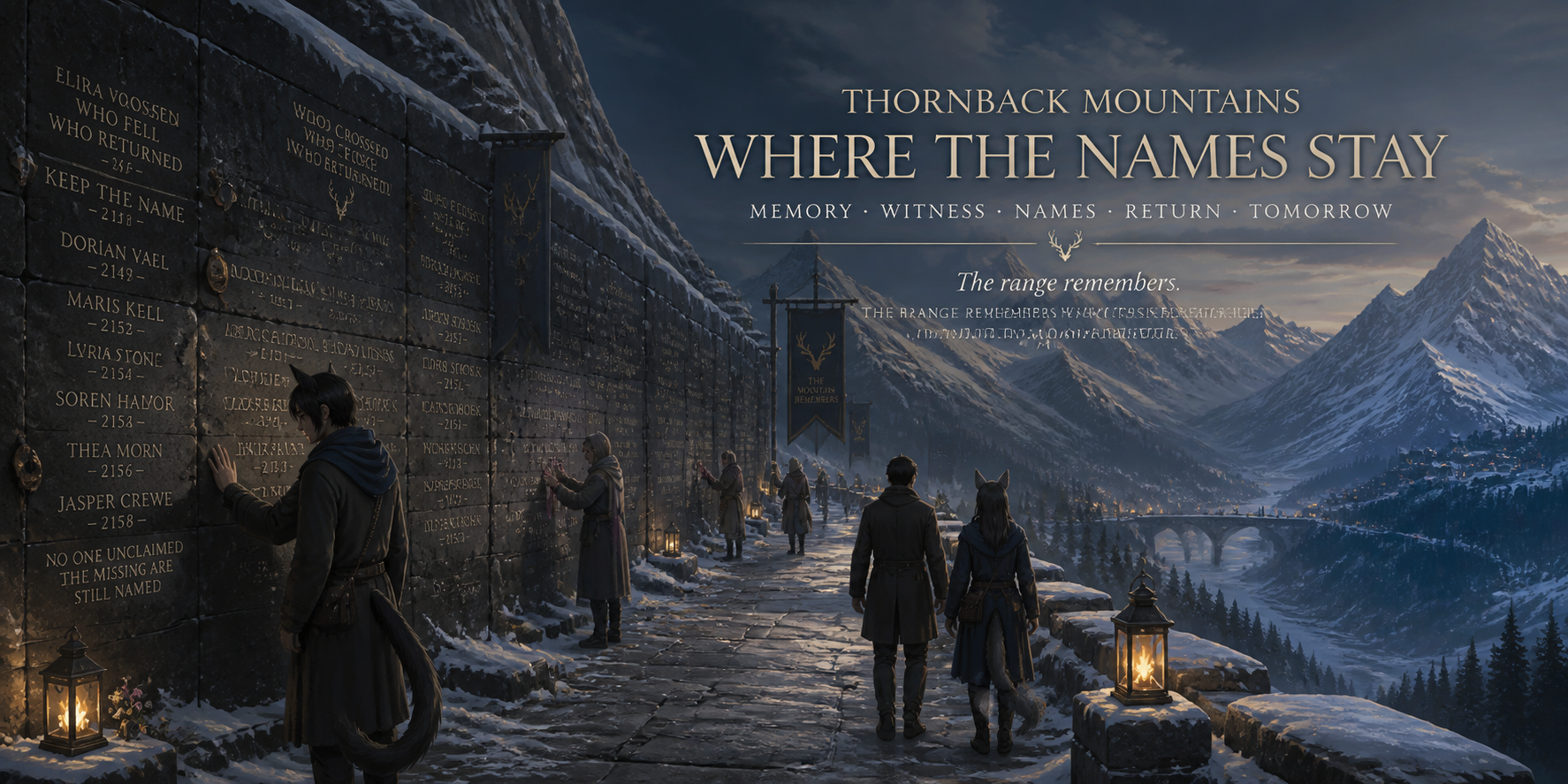
The Thornbacks preserve more than borders. Memorial walls, named passes and old route markers hold the identities of people who crossed, disappeared, died, returned or were finally recognized after another government tried to erase them.
The most important memorials are not isolated cemeteries. They remain part of roads still used by travelers, Borderwatch recruits, families and former refugees.
The stolen are named.
The missing remain part of the record.
The restored may choose how they are remembered.
The unknown are not treated as unclaimed.
Landmarks · Memorials · Sanctuary
Thornwyck's best-known fortified mountain approach and one of the first physical manifestations of sanctuary law.
A ridge-spanning signal network monitoring weather, border threats and rescue traffic.
A symbolic and practical checkpoint where ownership claims brought into Thornwyck lose legal force.
A former mountain monastery converted into sanctuary housing and long-term recovery space. Its old cells now open from the inside.
Marks an early sanctuary convoy disaster. Broken collars and restraint fragments are sealed into the route as permanent evidence.
A long memorial carved directly into the mountain preserving names of the stolen, dead, missing and restored.
A ceremonial and recovery ground centered on a promise that strength belongs to the person before it belongs to any state.
High-elevation patrol stations overlooking ridges, valleys and vulnerable mountain roads.
Remote medical posts treating frostbite, pursuit injuries, collar damage and shift trauma before travelers continue deeper into Thornwyck.
Collapsed human fortifications left standing in selected locations as both historical evidence and a fairly unsubtle warning.
Work · Travel · Mountain Life
Regional survey post used for rockfall monitoring, mineral mapping, tunnel assessment, landslide risk and rail-bed geology. Landon Serpentine regularly works through stations like this.
Tracks storm systems, snowpack, temperature shifts and avalanche risk across several major mountain corridors.
A warm civilian stop for surveyors, rail crews, hikers, sanctioned travelers and families moving between mountain valleys.
Trail food, winter equipment, repair supplies, medicine and locally produced goods for settlements too small to support larger commercial districts.
A mountain bathhouse warmed through engineered geothermal exchange rather than a natural hot spring, popular with workers returning from long field assignments.
A maintained civilian route overlooking sanctuary valleys, old towers and several historic passes.
A famous exposed rock face used by survey students and working geologists to study the layers that shaped the Thornbacks.
A mountain maintenance yard serving rail bridges, tunnel equipment, snow-clearing machinery and the crews who keep the range moving after storms.
Current National Status · 2097 A.E.
Border pressure is rising across Vistall. Sanctuary traffic is increasing. Foreign surveillance is intensifying. Thornwyck has answered by doubling the watch rather than closing the refuge its mountains were built to defend.
Situation Brief
The continent is still calling the crisis a cold war. Thornwyck's gates suggest that distinction is becoming increasingly academic. More bounty teams are appearing near sanctuary approaches, foreign military activity is rising, trusted routes are failing and the political cost of every rescued person is climbing.
Ministry of Sanctuary · Intake Pressure
More people are reaching Thornwyck through fewer trustworthy roads.
People
More children, injured survivors, protected witnesses, displaced families and people already pursued across multiple borders are reaching intake halls.
Capacity
Clinics, advocates, temporary housing, schools, protected transit and long-term placement all feel pressure when intake rises simultaneously.
Trust
A person betrayed by a false safehouse may not experience another intake desk as safety, no matter how carefully Thornwyck designed it.
Domestic Debate · Emergency Powers
The Security Argument
Supporters of expanded emergency authority argue that Thornwyck is facing conditions its ordinary peacetime systems were never built to handle simultaneously.
The Redress Argument
Grey Antler, rights advocates and skeptical Assembly members argue that crisis does not make body sovereignty temporarily optional.
A locked gate can protect a house.
A locked gate can also become a cage.
Foreign Pressure · Continental Position
A crisis does not need to begin in Thornwyck to arrive at a Thornwyck gate.
Military activity near western approaches and continued recovery pressure make the Crown Thornwyck's clearest conventional security threat.
Compromised routes and false sanctuary networks are redirecting survivors toward longer, more dangerous paths.
Restricted northern crossings are shifting refugee movement and reducing the number of reliable alternatives available to sanctuary networks.
Maritime sanctuary routes continue moving fugitives while Thornwyck provides legal recognition and international advocacy when a hidden harbor is not enough.
Thornwyck continues challenging Aurelean ownership classifications, ancestry doctrine and asset recovery while surveillance pressure rises.
Custody systems, lineage records, biomedical claims and Purity Grid evidence continue colliding with Thornwyck's Sovereign Body doctrine.
Old Red Road sabotage, unstable rail security, failed sanctuary routes and shifting alliances mean that one incident hundreds of kilometers away can become a Thornwatch legal case, a Grey Antler investigation or a Thornback intake emergency days later.
Purity Grid · Witness Vault · Data Conflict
Thornwyck rejects purity classification as a foundation for citizenship, but it cannot ignore the databases other governments use to classify the people arriving at its gates.
The Purity Grid can decide whether someone is treated as human, hybrid, dangerous morphology, escaped property, restricted bloodline or mythic asset before they ever speak for themselves.
Why the Vault Matters
Ownership files, transport records and survivor testimony allow Thornwyck to expose trafficking systems and challenge foreign governments on their own legal ground.
Why the Vault Is Dangerous
If stolen, witness files may reveal identities, family relationships, routes, sanctuary placements and people another government still considers valuable.
Why the Grid Is Cracking
Hidden ancestry, forged bloodlines, ghosted identities, contradictory records and leaks increasingly expose the Grid as a political instrument rather than an unquestionable biological truth.
Restricted Brief · Unverified
Persistent reports claim that Thornwyck is protecting a refugee carrying a rare mythic bloodline somewhere within a sealed mountain location. No public institution has confirmed the claim.
That has not stopped foreign intelligence services, collectors, activists, legal offices and Thornwyck's own oversight institutions from treating the possibility seriously.
If the Rumor Is False
Resources, surveillance and emergency authority could be expanding around a person who does not exist.
If the Rumor Is True
A living mythic line could attract governments, laboratories, collectors, traffickers and states claiming strategic interest.
If the Location Leaks
A hidden person can become the excuse for reconnaissance, extraction attempts, border escalation or diplomatic coercion.
If Protection Becomes Confinement
A valuable bloodline does not give Thornwyck ownership over the person carrying it, even when everyone involved believes they are acting for that person's safety.
2097 A.E. · National Question
Rescue
Younger activists, some Borderwatch voices and aggressive sanctuary advocates want Thornwyck to push rescue operations farther beyond its own borders rather than relying on survivors to reach the mountains first.
Defense
Security factions argue that Thornwyck must prepare for direct escalation, strengthen mountain defenses and give the state enough authority to respond before foreign pressure becomes invasion.
Oversight
Grey Antler investigators and civil-rights advocates insist that emergency conditions make independent review more necessary, not less. A sanctuary cannot defend body sovereignty by suspending it internally.
Restraint
Older Assembly members warn that human governments may benefit from portraying Thornwyck as an expansionist military state rather than a defensive sanctuary power.
The gates are open.
The watch has doubled.